Showing posts with label cynicism. Show all posts

Friday, September 17, 2010

The Real Men in the Arena


As I have written on these pages before, it can be a real leadership challenge to avoid the cynicism that often comes with work in complex environments. Life -- and experience -- can harden us to the point that we forget how hard it really is down in the trenches. We criticize, find faults, and push too much blame for our shortcomings down to them. As we move further up, and further away from those whose efforts produce the product, service, or revenues of our organization, we tend to neglect the people who truly make a difference.

Or not! It really is those men (and women) in the arena, who give purpose to leadership. It's not about us! It is about making others successful, about creating opportunities, inspiring greatness, and aligning the resources that people need to do their jobs. It is about developing a shared vision, creating strategies that make sense and align the abilities of every member of the team, and accomplishing the mission with the people we've got. It's not about board meetings, the hard hours we work, or the pressure of our responsibilities. Nope...leadership is not about us. It is truly about that man in the arena.

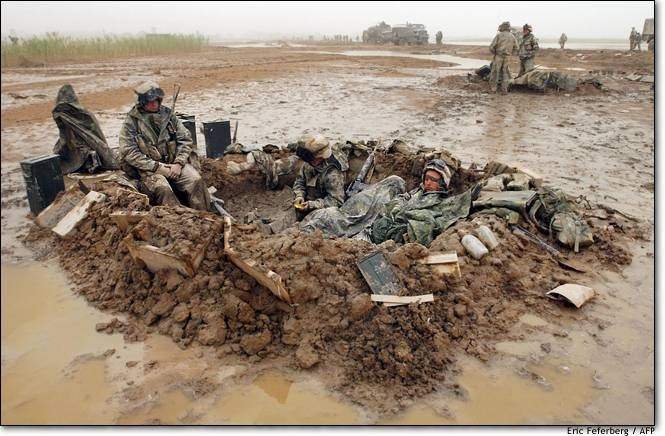
In Afghanistan, it is too easy to become cynical about the men who are struggling to build for themselves and their families a better tomorrow. Most are not well educated. They certainly are new to things like construction, elections, and so many things that we take for granted in most of the rest of the world. And yet, most of those men give it their best. They are willing to learn new crafts. They want education for themselves and their families. Most want to see their country succeed and will give it all they have, some paying with their lives, to give their collective efforts a chance to work.

It is these men in the arena, and those who work hard to make our organizations successful, whom we cheer. It is them whom we must inspire to achieve greatness. It is about them, who President Theodore Roosevelt once wrote (lines which I have shared with you before but which inspire me still):

It is not the critic who counts: not the man who points out how the strong man stumbles or where the doer of deeds could have done better. The credit belongs to the man who is actually in the arena, whose face is marred by dust and sweat and blood, who strives valiantly, who errs and comes up short again and again, because there is no effort without error or shortcoming, but who knows the great enthusiasms, the great devotions, who spends himself for a worthy cause; who, at the best, knows, in the end, the triumph of high achievement, and who, at the worst, if he fails, at least he fails while daring greatly, so that his place shall never be with those cold and timid souls who knew neither victory nor defeat.

Leadership is about people. It is not about position, rank, or prestige. In the end, none of those things get the mission done. People do. None of those can build a Nation. People will. Nothing matters but those men in the arena. It matters not whether we are talking about construction workers in Afghanistan or Los Angeles. If we believe in people, and make them believe in themselves, they will toil with every ounce of energy to achieve victory. That's Leader Business!

Saturday, June 14, 2008

Know When to Fold 'Em


During a Q&A session following a speech I gave to the Orange County Leadership Academy, someone asked a question to which I am sure we can all relate:

"Colonel, what do I do if my boss won't take my suggestions? I hear what you are saying about taking risks and pursuing big ideas, but what are my options if my supervisor doesn't agree? What can I do?"

Here are a few thoughts...and something I have been thinking about a lot recently. I know that, unless you are the President of the United States, you answer to someone and you, like me, are under an authority that makes decisions that you have to follow. So what do we do when our supervisors don't go along with our recommendations, won't adopt our proposals, or will not take the course of action that we know with every fiber of our being is the right one? What do we do if we have articulated the strengths of our preferred alternative, argued passionately about its merits, and done everything we could to outline the best way to go, only to be overruled?

Sing it with me and Kenny Rogers..."You got to know when to fold 'em...."

When I got this question, it hit me square between the eyes as I have been wrestling with this same predicament. That's right, I don't always agree with my supervisors. I put my blood and sweat into certain decisions that are not ultimately approved. I disagree with mandates from my headquarters. Hey...I'm a Soldier.

But what do we do when we don't like the boss' decision? Soldier on!

This is a scenario that leaders at all levels encounter regularly, especially those who are passionate about what they do and push for what they believe is right. Eventually, we must all reconcile with the fact that the boss is the boss -- and we are not. Fight the good fight, make the best case you can, then salute and move out!

Now...I'm not suggesting we should role over on every decision. I'm not making the case for "Yes-Men!" On the contrary, I'm all for a good battle. But the time for fighting, for passionate debate, for non-concurrence is before the boss decides -- not after. We have to do our best to identify and mitigate risks and to identify the strengths of the best alternative and the weaknesses of the others as part of the decision making process -- not after the decision is made. Once the boss has decided, we cannot undercut his authority. No whining, no whispering, no working in private to scuttle. That's disloyal and insubordinate and will lead to organizational ruin.

I'm not talking about immoral or illegal decisions. Of course, those should be called out at any time for what they are. But if they are not this sort of ethical breach but rather a professional difference, the boss wins. The Ace beats the King. And we've got to know when to fold 'em.

Finally, I believe that if we don't like the boss' decision, we have only two choices:

1. Suck it up and be a good Soldier. Keep your personal thoughts to yourself and be a champion for the decision. Sleep well knowing you did all you could to make your case. File away the lesson for when you are the Ace. or

2. Vote with your feet...and leave. Go someplace where your ideas are welcome or where you can hold all the cards.

To do something different, to be somewhere in the middle and undercut our leaders, is a disservice to the boss, to the organization we serve, and to our own authority. You see...we should expect no less from our own team.

Play all your cards before the boss makes her play. Be aggressive, argue with passionate professionalism. But when the decision is made, put down your cards and pick up the case for the new decision. Embrace and market it as if it were your own (the ultimate test of a true professional).

This is hard to hear sometimes. But when I answered the question, I knew I was reminding myself of this key leadership lesson. Know when to fold 'em, friends. That's Leader Business!

Saturday, February 23, 2008

The Man in the Arena


"It is not the critic who counts: not the man who points out how the strong man stumbles or where the doer of deeds could have done better. The credit belongs to the man who is actually in the arena, whose face is marred by dust and sweat and blood, who strives valiantly, who errs and comes up short again and again, because there is no effort without error or shortcoming, but who knows the great enthusiasms, the great devotions, who spends himself for a worthy cause; who, at the best, knows, in the end, the triumph of high achievement, and who, at the worst, if he fails, at least he fails while daring greatly, so that his place shall never be with those cold and timid souls who knew neither victory nor defeat."
Theodore Roosevelt"Citizenship in a Republic,"Speech at the Sorbonne, Paris, April 23, 1910

This is perhaps my favorite leadership quote. I referred to this almost daily when I served as a trainer at the Army’s National Training Center. It was too easy to become a cynic, to roll one’s eyes when those units and leaders that we were training made “seemingly” simple mistakes. But they were in the arena. They were the ones who had gone for days without sleep, who were under the constant pressure of decision making. Theirs were the faces covered with dirt, blood, and sweat. They were the doers…and I was not!

Isn’t this what leadership is all about? Getting in the arena…making decisions…being held accountable for what we do? Being willing to take risks…and at least falling forward when we fail?

Leadership is not about standing on the sidelines and telling people how easy it is to hire, fire, make decisions, or execute (apologies to all those authors and “motivational speakers” who never held a meaningful leadership position!). It’s not about being a critic or, at worst, a cynic, who does not give credit to those who try!

Leadership in the arena is about putting yourself out there…and doing it. It’s about failing and learning from mistakes. It’s about taking on increasing leadership responsibilities, earning the right to lead…paying your dues. It’s about faces covered with dirt, blood, and sweat!

Here’s to the “Man in the (leadership) arena!” Hooah!